
What to Check Before Buying a Pre-Owned Apartment
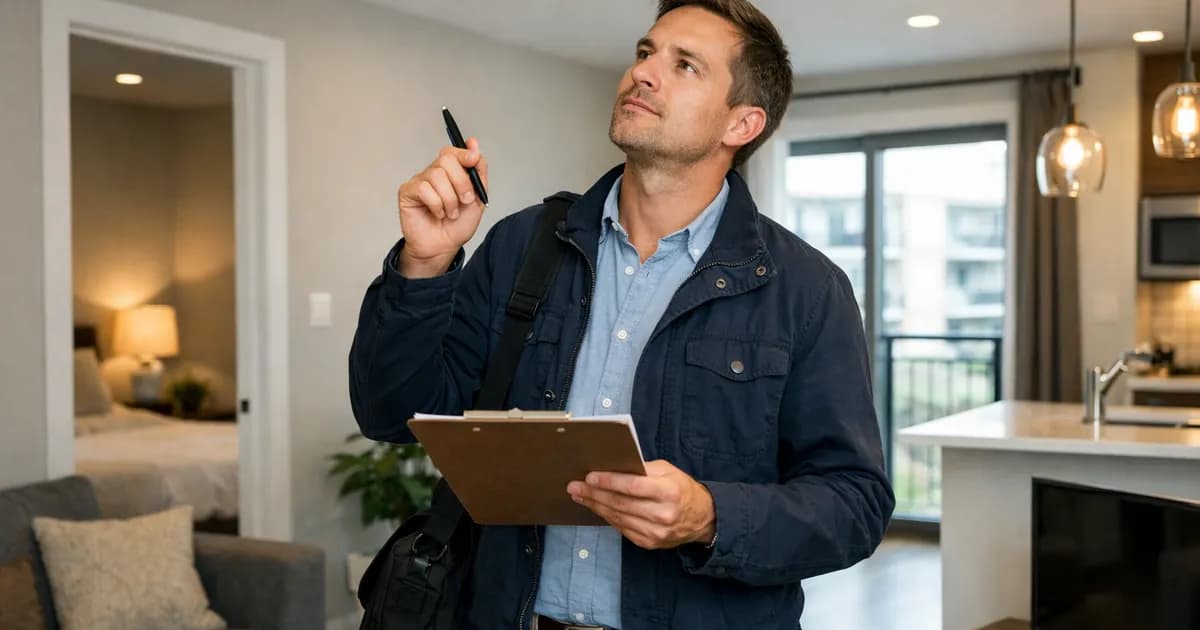
Before buying a pre-owned apartment, you need to review three areas: the paperwork (title report, certificate of occupancy, energy performance certificate, property tax bills, and homeowners association minutes), the physical condition of the home (dampness, cracks, electrical system, plumbing, windows), and the building as a whole (building inspection, facade, and any pending special assessments). Most expensive surprises come from skipping one of those three areas because of rushed decisions.
An apartment is the most expensive purchase you will ever make, and almost nobody gives it the same care they would when buying a used car. Many people sign after two fifteen-minute visits with the seller standing there. This is where things can go wrong: what you fail to check before signing is what you end up paying for later. Let’s go step by step, in the order that makes the most sense.
What documents should you ask for before buying an apartment?
The paperwork tells you the apartment’s legal history, and it often reveals problems you will not notice during the visit. Ask for it before putting down any deposit.
- Title report from the Land Registry. This is the key document. It tells you who the real owner is, how many square feet or square meters are officially recorded, and whether the property has mortgages, liens, or other encumbrances. It costs about 9 euros, and you can request it yourself. If the person selling is not the one listed as the owner, walk away from the deal.
- Certificate of occupancy or occupancy permit. This proves the home meets the minimum legal requirements to live in it. Without a valid certificate, you may have problems setting up utilities or getting a mortgage.
- Energy Performance Certificate. It is legally required for a sale. It gives you a clue about energy consumption and insulation. An apartment rated E, F, or G will cost you more in heating every winter.
- Latest property tax bill and utility bills. Check that there are no outstanding debts. Property tax debts stay with the property, not with the person, so you could inherit them.
- Minutes from the latest homeowners association meeting and a certificate showing the account is current. This is where approved special assessments, neighbor disputes, and the state of the association’s finances appear. A special assessment for the facade or elevator can easily run into several thousand euros.
If the seller makes excuses when you ask to see any of these documents, be careful: either they are not in order or there is something they do not want you to see.
What should you inspect with your own eyes in the home?
Once the paperwork is in order, it is time for the physical inspection. You do not need to be an architect; you need a method and the discipline not to get distracted by a brand-new kitchen or by wanting to move in immediately.
Dampness and stains
Look at ceilings in wet areas, corners, the lower part of walls, and around window frames. Brown stains, peeling or bubbling paint, or that stale smell are signs of moisture. Not all moisture problems are the same or cost the same to fix, so it is worth knowing how to tell them apart: we explain it in detail in the guide on how to detect dampness in an apartment before buying. If the apartment smells like fresh paint in the middle of summer, be suspicious: sometimes paint is used to hide a stain just before viewings.
Cracks and fissures
Not all cracks are serious. Fine hairline cracks in plaster are normal over time. Worry when a crack is more than 3 millimeters wide, runs horizontally across a wall, runs diagonally from one corner to another, or appears next to doors that no longer close properly and uneven floors. That could point to a structural or foundation problem, and at that stage you are talking about a technical inspection before buying.
Electrical system
Open the electrical panel. If you see porcelain fuses instead of circuit breakers, or there is no residual-current device, the electrical system is old and probably unsafe. Installations from before 2002, or more than 25 or 30 years old without renovation, usually need to be fully replaced. Rewiring an 80-square-meter apartment typically costs between 5,000 and 7,000 euros, so this is not a minor detail.
Plumbing and windows
Turn on every faucet at once and check the water pressure. Flush the toilet, make sure hot water arrives quickly, and look under sinks for leaks. Open and close all windows and doors: if they rub or do not close properly, it may be wear and tear or, again, movement in the building.
Why does the building matter as much as the apartment?
You can buy the perfect apartment in a building that is falling apart, and the problem will still end up being yours. Before signing, look beyond the apartment itself and assess the whole building.
- Building inspection. This is mandatory for buildings once they reach a certain age, usually 45 or 50 years depending on the municipality. Check that it has been done and, above all, whether it came back with deficiencies. An unfavorable inspection forces the homeowners association to carry out work, and all owners pay for that work.
- Facade, lobby, and roof. A well-maintained facade and uniform windows throughout the building usually indicate a well-run, financially responsible association. Cracks in the facade, dampness in the lobby, or a roof in poor condition are warning signs of special assessments.
- Pending special assessments. This is what can cost you the most money all at once. Ask, and insist in writing, whether any work has been approved or is being considered: elevator replacement, energy retrofit, roof work. By law, a special assessment approved before the purchase is paid by whoever was the owner when it was approved, but this is something that should be negotiated and made clear in the contract.
How much do the hidden costs and repairs add up to?
The listing price is never the real price. On top of what you pay for the apartment, you also need to add the purchase costs and taxes and whatever it costs to make the place your own.
For taxes and closing costs alone, set aside between 10% and 12% of the price. The largest part is the property transfer tax, which in 2026 ranges from 6% to 10% depending on the autonomous region (with reduced rates for people under 36, large families, or people with disabilities in many areas). On top of that, add the notary fee (between 600 and 900 euros), the registry fee (between 400 and 600 euros), and, if you get a mortgage, the appraisal (between 250 and 400 euros).
Then there is the renovation. An apartment that needs the bathroom, kitchen, and systems updated can cost between 600 and 900 euros per square meter in a mid-range renovation. Before deciding whether the price is good, estimate that work and subtract it from the sale price: we go over it in how much it costs to renovate a pre-owned apartment. A cheap apartment that needs 50,000 euros in repairs stops being cheap very quickly.
How many times should you visit the apartment before deciding?
At least twice, and at different times of day. A daytime visit with sunlight tells you nothing about the noise from bars downstairs at eleven at night, the real amount of light in winter, or whether the lobby gets crowded when school lets out across the street. Go on a weekday and on the weekend, during the day and at dusk. Talk to a neighbor if you can: in two minutes they can tell you things the seller will not.
On the second visit, take your time, bring your phone to take photos of every room, and use this checklist. Open closets, look behind furniture (sometimes stains are hidden there), test outlets, and raise and lower the blinds. The more thorough you are, the fewer surprises you will have later.
Reviewing an apartment thoroughly takes time and knowledge, and it is easy to overlook exactly the issue that will cost the most. AskPancho guides you step by step through every room and every system, tells you what photos to take and what to ask, and helps you spot problems before you sign. Don’t let a bargain turn into a costly mistake.
Methodology
Pancho, our AI assistant, walks you through buying a second-hand home in three layers. First the listing: he helps you pin down what you are really after and check whether what you find genuinely fits your needs. Then the area: what the neighbourhood is actually like, covering safety, schools, transport, amenities and the little things that shape day-to-day life. And finally the guided visit: Pancho takes you point by point to inspect the property in depth, from damp and structure to wiring and plumbing, window frames, kitchen, bathrooms, climate control and paperwork. We work from real inspection criteria, which we review and keep up to date. This content is for guidance only: it helps you know what to look at and what to ask before you sign, but it does not replace an in-person technical inspection, a valuation or the advice of a chartered professional.
Especialistas en compra de vivienda de segunda mano y análisis con IA
At AskPancho we help you buy a second-hand home with a clear head. With Pancho, our AI assistant, we help you pin down what you are looking for and see whether listings fit your needs, understand what the area is really like (safety, schools, transport and amenities), and inspect the property in depth on a guided visit, so you spot what really matters before you sign.