
How to Check a Used Apartment's Electrical System Before Buying
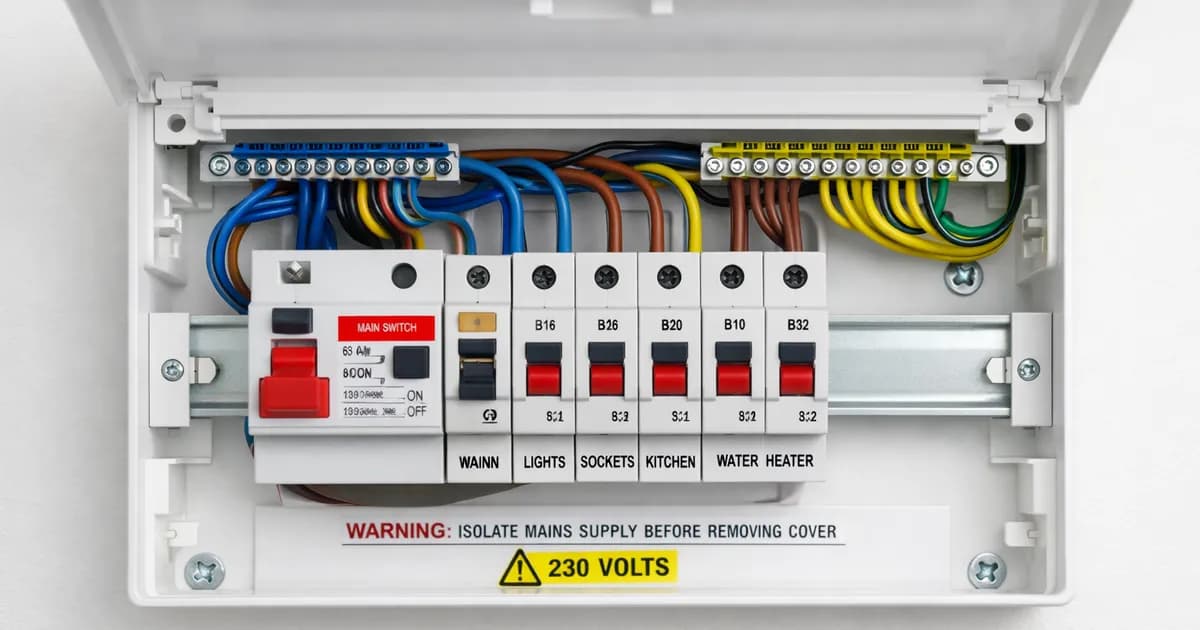
To check the electrical system in a used apartment before you buy, open the panel and see whether it has modern breakers and a residual-current device (RCD); if you find porcelain fuses, there’s no RCD, or the system predates current regulations or is 25 to 30 years old, chances are it needs a full replacement. It’s one of the most expensive and dangerous items you won’t spot on a viewing: rewiring an 80-square-meter apartment usually runs from €5,000 to €7,000.
The electrical system is one of those things nobody checks until it starts causing problems, and when it does, those problems are expensive or dangerous. An apartment can have a beautiful kitchen and a seventies-era installation hidden behind the wall. Don’t gamble on this: outdated wiring means fire risk and, on top of that, a budget hole almost nobody factors in before signing.
Why is it so important to check the electricity before buying?
Over the years, electrical materials wear out: cables overheat, insulation cracks, and sockets loosen. The most obvious risk is fire caused by overheating or a bad connection. And there’s one detail many people don’t know: some insurers may refuse to pay if the loss happens in an obsolete, uncertified installation. So the risk is not just fire, but ending up without coverage when you need it most.
It’s also an invisible repair. You can spot moisture problems by looking at the wall, but electricity runs behind it. That’s why it’s worth checking it carefully before you buy, not after it’s already your problem. It’s one of the key points in what to check before buying a used apartment.
How can you tell if an apartment’s electrical system is old?
You don’t need to be an electrician to get a rough idea. Open the electrical panel, or breaker box, and look for these signs:
- Porcelain fuses. Those round ceramic caps belong to old systems. If you see them, the wiring almost certainly needs an upgrade.
- No ground-fault circuit interrupter (GFCI). The GFCI is the switch that trips to protect you from electric shock. If there isn’t one rated at 30 mA, the system doesn’t meet current standards.
- Too few circuits. A modern system separates the kitchen, outlets, lighting, and so on. If the whole apartment is hanging off one or two breakers, it’s outdated.
- Aluminum wires or no grounding. Aluminum wiring and the absence of grounding are clear signs of an old installation.
- Age. If the system predates current regulations or hasn’t been checked in more than 25 years, start thinking about replacing it. Once it’s 40 years old, don’t wait for problems.
What warning signs can you spot yourself during the viewing?
Beyond the panel, the apartment itself will tell you if the installation is on its last legs. During the viewing, watch for this:
- The breakers or RCD trip often.
- The sockets feel warm or hot to the touch.
- You smell burning or plastic near the outlets or the panel.
- The lights flicker or dim on their own when you switch on an appliance.
- There are loose, burned, or yellow-stained sockets.
- There are power strips and multi-plug adapters everywhere, which usually means there aren’t enough outlets.
Plug your phone charger into several sockets to see whether they work, test the switches, and turn on a large appliance if you can. Any of these signs is a good reason to ask the seller when the installation was last updated.
How much does it cost to renew an apartment’s electrical system?
If the installation is obsolete, replacing it isn’t a luxury: it’s about safety. Here are rough 2026 prices for a full renovation:
- 60-square-meter apartment: between €4,000 and €5,500.
- 80-square-meter apartment: between €5,000 and €7,000.
- 100 to 120-square-meter apartment: between €7,000 and €10,000.
The price goes up if walls need to be opened to run new cables, which is almost unavoidable in an old system. That’s why electrical work usually goes hand in hand with a broader renovation: if you’re opening walls anyway, you might as well make the most of it. Keep that in mind when estimating how much it costs to renovate a used apartment, because the installations are one of the biggest budget items.
That price covers much more than cables: a new panel with breakers and RCDs, separate circuits for the kitchen, washing machine, bathrooms, and lighting, new outlets with grounding, labor, and the wall breaking and repair needed to run everything. If the apartment has been empty for years, add the utility hookup and the certificate. So when an electrician gives you a suspiciously low quote, ask what’s included: often the breaking-up work or the certificate is left out, and that’s exactly what drives the price up. And if you’re updating the system, take the chance to check the contracted power too, because a home with modern appliances usually needs more than a house from thirty years ago.
What is the electrical installation certificate, and when do you need it?
The electrical installation certificate is the document signed by a licensed electrician that proves the installation complies with the rules. You’ll need it to get the power connected in a home that has been without electricity for a long time, when you increase the contracted power, or after a wiring renovation.
It usually costs between €70 and €300, though the most common range is closer to €100 to €150. If the apartment has been empty for years or the installation is very old, the technician may refuse to sign it until repairs are made, and that’s where the renovation cost comes in. Ask the seller whether the apartment has a valid certificate: if it doesn’t and the installation is old, be ready to take that cost on.
Do you have to redo the whole installation, or can it be updated in parts?
You don’t always have to rip everything out. It depends on the condition of the cables and how far the installation is from current standards. It helps to distinguish two scenarios.
Sometimes an update is enough: add a 30 mA RCD, install the missing grounding, replace the old fuse panel with a breaker panel, or split the installation into more circuits. These are targeted fixes, much more manageable, when the cables are in good condition and all you need is to bring the protections up to date.
Other times, you need to start over: when the cables are aluminum, undersized for today’s appliances, overheated, or the insulation is falling apart. In that case, patching things up won’t do, because the problem is the wiring itself inside the wall, and that means opening the walls and running new cable.
The only way to know which case you’re in is to have a licensed electrician inspect it and give you a written quote. Ask for it before you buy, not after: the difference between updating and rewiring can be several thousand euros, and that’s exactly the kind of figure that helps you negotiate the apartment price.
Spotting the real condition of an electrical system at a glance isn’t easy, and it’s exactly the kind of expensive defect that gets missed when you’re in a hurry. AskPancho helps you check the panel, outlets, and warning signs room by room, and it helps you put a price on the repairs before you sign. Cheap shouldn’t end up costing you more.
Methodology
Pancho, our AI assistant, walks you through buying a second-hand home in three layers. First the listing: he helps you pin down what you are really after and check whether what you find genuinely fits your needs. Then the area: what the neighbourhood is actually like, covering safety, schools, transport, amenities and the little things that shape day-to-day life. And finally the guided visit: Pancho takes you point by point to inspect the property in depth, from damp and structure to wiring and plumbing, window frames, kitchen, bathrooms, climate control and paperwork. We work from real inspection criteria, which we review and keep up to date. This content is for guidance only: it helps you know what to look at and what to ask before you sign, but it does not replace an in-person technical inspection, a valuation or the advice of a chartered professional.
Especialistas en compra de vivienda de segunda mano y análisis con IA
At AskPancho we help you buy a second-hand home with a clear head. With Pancho, our AI assistant, we help you pin down what you are looking for and see whether listings fit your needs, understand what the area is really like (safety, schools, transport and amenities), and inspect the property in depth on a guided visit, so you spot what really matters before you sign.