
How to Spot Damp in an Apartment Before You Buy
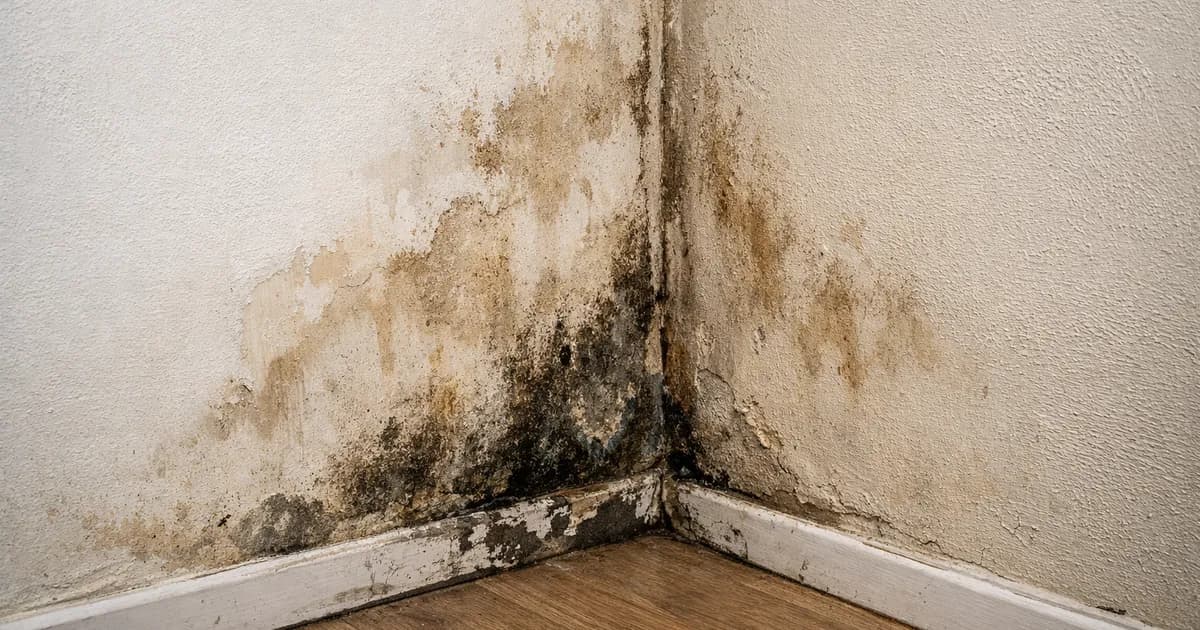
To spot damp in an apartment before you buy it, look for stains, bubbling paint, a stale smell and mould in the usual places: the lower part of the walls, bathroom and kitchen ceilings, cold corners and window frames. What matters isn't just seeing it, but figuring out what kind it is — rising damp, leaks or condensation — because each has a different cause, a different level of seriousness and a very different repair cost.
Damp is the defect that causes the most headaches when buying a used apartment. Sometimes it's just a ventilation issue you can fix yourself. Other times it's a problem that eats up the whole renovation budget and comes back even after you paint over it. The difference is knowing how to read the signs before you sign, not afterwards. Don't gamble on this.
What types of damp can an apartment have?
There are three main types, and it's worth knowing how to spot them because each one needs a different fix.
- Rising damp. Ground moisture travels up through the walls from the floor. The classic sign is a stain that starts at floor level and climbs up the wall to a certain height, forming a fairly horizontal line. It shows up especially on ground floors and in basements. It's one of the hardest problems to eliminate because you have to stop the water from rising.
- Leak-related damp. Water gets in from outside: a damaged facade, a poorly waterproofed terrace, a broken pipe or the apartment above. It usually appears on ceilings and in the upper part of walls, and it often gets worse when it rains. It depends on third parties the most (the homeowners' association or the neighbour), so it can be a real pain to fix.
- Condensation damp. This is the most common and the least serious. Water vapour in the indoor air (showers, cooking, drying clothes) condenses when it touches cold surfaces and builds up in corners, behind wardrobes and around window frames. It usually comes from poor ventilation or insulation, and you can often control it by ventilating better or fitting new windows.
Telling harmless condensation apart from serious rising damp or a leak can save you — or cost you — thousands. That's why it's always worth checking, along with the rest of the points in our guide on what to check before buying a used apartment.
Where should you look for damp?
Damp problems almost always hide in the same places. Go through them one by one during the viewing.
- The lower part of the walls, especially on ground floors and on walls facing the street or courtyards.
- Bathroom and kitchen ceilings, the rooms where the most steam is generated and where leaks from the flat above tend to show up first.
- The outer corners of rooms and the spots behind wardrobes and large furniture, where air doesn't circulate.
- Window frames and sills, where condensation tends to collect.
- Walls that border terraces, roofs or utility rooms.
Bring a flashlight or use your phone's light at an angle across the wall: that makes bulges and recent patch jobs much easier to spot than if you look straight on.
How can you tell whether a damp stain is active or already dry?
An old stain from a repair that's already been fixed is not the same thing as damp that's still active. These signs can help you tell the difference.
Signs of active damp
- The wall feels cold and damp to the touch.
- The paint is bubbling, cracked or peeling, and the plaster crumbles when you touch it.
- There is black or greenish mould, especially in corners and joints.
- It smells stale or earthy, and the smell doesn't go away even when you air the place out.
The plastic-sheet trick
There is a simple home test you can ask for if you're unsure and have the time: tape a sheet of clear plastic over the suspicious area and seal the edges well with tape. After 24 or 48 hours, if water appears on the inner face (the side touching the wall), the moisture is coming from inside the wall (rising damp or a leak). If it appears on the outer face (the side facing the room), it's condensation from the air. It's a simple test, but it gives you a lot of useful clues before you call a professional.
And watch out for the opposite: if a bedroom smells like fresh paint in the middle of summer, or if only one wall has been repainted and the rest hasn't, someone may have covered up a stain just before putting the apartment on the market.
How much does it cost to fix damp in an apartment?
It depends a lot on the type and the source, so don't trust anyone who gives you a neat figure without seeing the problem. Broadly speaking:
- Condensation caused by poor ventilation can often be fixed by improving airflow, installing a ventilation system or changing the windows. It's the most manageable case.
- A one-off leak from a pipe or seal is usually affordable to fix, but if it comes from the facade or the roof, the homeowners' association gets involved and it can end up as a special assessment.
- Serious rising damp means treating the wall from the base up, removing damaged material, drying it out and rebuilding the finish. It's one of the most expensive and time-consuming repairs, and if it's done badly, it comes back.
If you spot damp that doesn't add up, the sensible move is to ask for a quote from a specialist before you buy and deduct that cost from the price. That expense is part of what it takes to get the apartment ready, and it's worth calculating properly, as we explain in how much it costs to renovate a used apartment.
What should you ask the seller when you see a damp stain?
When you spot damp, don't settle for the first explanation. Ask directly and check whether the answers line up; contradictions tell you a lot.
- How long has that stain been there, and what caused it?
- Has it ever been repaired? Who did it, and is there an invoice for the work?
- Does it appear or get worse when it rains? If so, that points to a leak.
- Has the homeowners' association had facade, roof or pipe work in recent years?
- Do any other apartments in the building have the same problem?
If you can, ask a neighbour or the chair of the homeowners' association too: they can tell you in two minutes whether the building has facade or roof problems that the seller won't mention. A damp patch the seller swears has been fixed, but with no invoice or details of what was done, often keeps working underneath. And if the stain is on a wall facing an interior courtyard or a shared terrace, the source is almost never yours alone.
Is damp in an apartment a reason not to buy it?
Not always. Condensation can be managed and shouldn't automatically kill the deal. The problem is structural damp that the seller downplays with lines like “it's just condensation, it'll go away if you air it out”, when it's really rising damp or a leak from the facade. That's one of the most common excuses, and believing it without checking can be expensive.
The rule is simple: damp you have identified and understood is a negotiating tool; damp you ignore turns into a bill later. If you see it, ask for a written quote, get a real repair estimate and use it to bring the price down or walk away.
Spotting and classifying damp properly takes a good eye and a clear idea of where to look, and it's exactly the sort of thing that's easy to miss when you're rushing through a viewing. AskPancho walks you through the apartment room by room, tells you what photos to take of each stain and helps you work out whether what you're seeing is a minor issue or a serious problem before you sign anything. So the cheap option doesn't end up costing you more.
Methodology
Pancho, our AI assistant, walks you through buying a second-hand home in three layers. First the listing: he helps you pin down what you are really after and check whether what you find genuinely fits your needs. Then the area: what the neighbourhood is actually like, covering safety, schools, transport, amenities and the little things that shape day-to-day life. And finally the guided visit: Pancho takes you point by point to inspect the property in depth, from damp and structure to wiring and plumbing, window frames, kitchen, bathrooms, climate control and paperwork. We work from real inspection criteria, which we review and keep up to date. This content is for guidance only: it helps you know what to look at and what to ask before you sign, but it does not replace an in-person technical inspection, a valuation or the advice of a chartered professional.
Especialistas en compra de vivienda de segunda mano y análisis con IA
At AskPancho we help you buy a second-hand home with a clear head. With Pancho, our AI assistant, we help you pin down what you are looking for and see whether listings fit your needs, understand what the area is really like (safety, schools, transport and amenities), and inspect the property in depth on a guided visit, so you spot what really matters before you sign.