
Which Cracks in an Apartment Are Dangerous and Which Aren’t
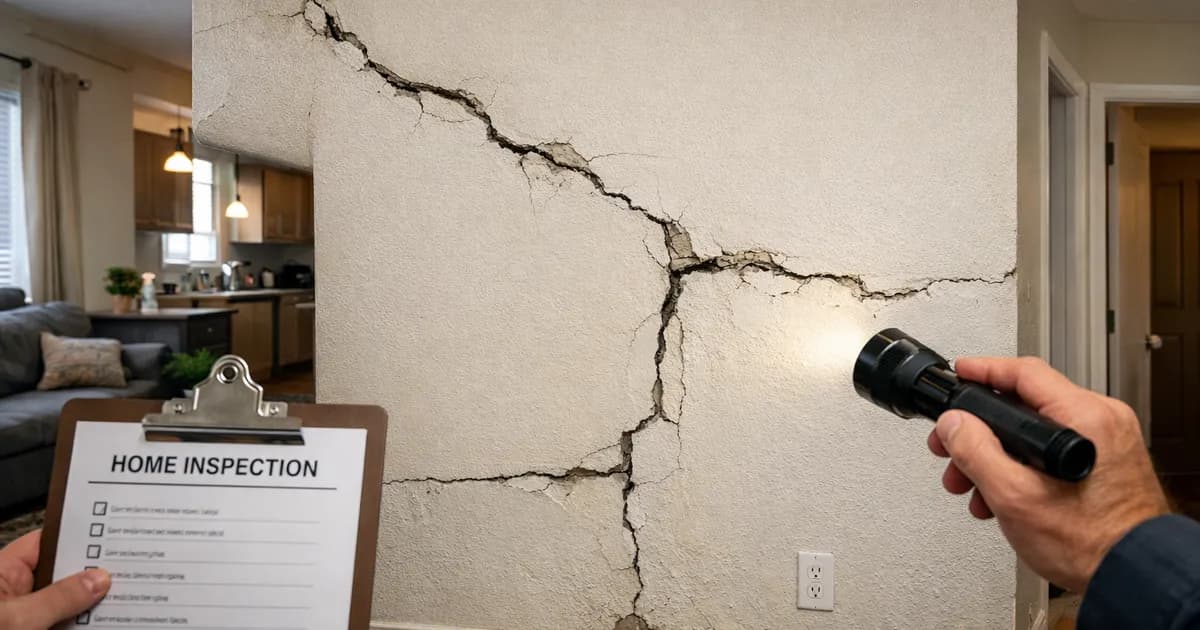
Dangerous cracks in an apartment are those that appear in structural elements (load-bearing walls, beams, slabs), those wider than 3 millimeters, horizontal cracks in a wall, and diagonal cracks that run from one corner to another. Fine hairline cracks in plaster, on the other hand, are usually cosmetic. The key is not only size, but whether the crack keeps growing: an active crack is always a warning sign.
Not every crack means the building is about to collapse, but some do point to a serious and costly problem. The mistake is making either of the two extremes: obsessing over every ceiling hairline crack, or signing without looking at a crack that cuts across half a wall. Learning to tell them apart saves you stress and gives you leverage in negotiations. Let’s take a look.
What Is the Difference Between a Hairline Crack and a Structural Crack?
Although people often use them as synonyms, they are not the same, and the difference matters a lot.
- Hairline crack. This is a thin, superficial opening that affects only the finish layers: plaster, paint, or drywall compound. It does not go through the element that supports the structure. It is usually cosmetic and appears over time due to expansion and contraction or the normal settling of any building.
- Crack. This is a deeper, wider fracture that can affect brick, concrete, or load-bearing components. When a crack affects the structure, we are no longer talking about aesthetics but about safety.
A practical rule: if you run your fingernail over it and barely notice it, it is usually a hairline crack; if the tip of a pencil fits in or you can see depth, it is a crack and deserves attention. Checking walls and ceilings is one of the basic points when reviewing an apartment before buying it.
Which Cracks Are Dangerous in an Apartment?
These are the ones that should raise an alarm and, in many cases, stop the purchase until you get a technical report:
- Cracks in structural elements. Cracks that appear in load-bearing walls, beams, columns, or slabs are the most serious, because they affect what holds the building up.
- Horizontal cracks. These are considered more dangerous than vertical ones. A horizontal crack in a load-bearing wall may indicate lateral pressure, uneven settlement, or a foundation problem.
- Diagonal cracks running from corner to corner. Especially if they start at the corners of doors and windows and extend downward, they usually point to structural movement.
- Wide cracks. Once the opening reaches about 3 millimeters, and even more so if it runs from one wall to another, it is worth having a professional look at it.
If you also see these cracks along with doors that no longer close properly, windows that stick, uneven floors, or glass breaking for no apparent reason, those are several signs pointing to the same issue: the structure is moving.
How Can You Tell Whether a Crack Is Active or Has Already Stopped?
An old crack from a settlement that ended decades ago is not the same as a crack that is still moving. These clues help tell them apart:
Signs of an active crack (the bad one)
- It has widened over a few weeks or months.
- It gets longer or branches out over time.
- New cracks appear around it.
- The edges are clean and the inside looks fresh, with no dust or old paint inside.
A trick used by professionals is to place a gauge: a plaster mark or a small glass piece crossing the crack. If after a few weeks the gauge breaks or separates, the crack is active. You may not always have that much time before buying, but ask the seller how long the crack has been there and whether it has changed.
Which Cracks Shouldn’t Worry You Too Much?
Not every crack is cause for alarm. These are usually cosmetic and can be fixed with filler and paint:
- Fine, superficial hairline cracks in plaster or paint, especially on ceilings.
- Small cracks at the joints between the ceiling and the wall, typical of material expansion and contraction.
- Hairline cracks around door and window frames that have looked the same for years and have not grown.
- Microcracks in non-load-bearing partitions (walls that only separate rooms).
These do not affect the structure, although they should still be repaired because moisture can get in through a crack. In fact, a crack and a damp stain often go together, so cross-check this review with how to detect dampness in an apartment before buying.
Why Do Cracks Appear in an Apartment?
Understanding where a crack comes from helps gauge how serious it is. The most common causes are:
- Natural settling of the building. Every building settles over the years, and that creates fine cracks that are usually not serious.
- Ground movement. Clay soils that swell and shrink with wet and dry conditions, or poorly compacted fill, can move the foundation and open serious cracks.
- Nearby construction or excavation. Building next door, a tunnel, or digging work can affect neighboring structures.
- Overloading or poorly done renovations. Removing a partition wall that was actually load-bearing, or loading a slab beyond what it can support, is a common and dangerous cause.
There is one case worth knowing about in Spain: aluminosis. It is the deterioration of concrete made with high-alumina cement, which was widely used in buildings built between the 1950s and 1970s, especially in some areas. That concrete loses strength over time and with moisture, and it can compromise beams and slabs. If the building dates from that period, ask whether any aluminosis testing has been done: it is a serious problem that affects the whole building, not just one apartment.
When Should You Ask for a Technical Report Before Buying?
When a crack shows any of the warning signs mentioned above (structural, horizontal, diagonal from corner to corner, wider than 3 millimeters, or clearly active), do not sign without a report from an architect or structural engineer. The cost of that report is tiny compared with what a structural repair can cost you, or worse, buying an apartment in a building with a foundation problem.
The professional will tell you whether the crack is cosmetic or structural, whether it is active, and what kind of repair it needs. With that report in hand, you can make a decision based on facts: lower the price to cover the repair, or walk away. What makes no sense is trying to interpret it on your own when so much money is at stake.
That report does more than help you decide: if you end up buying, it documents the condition of the property, which can be useful if the seller hid a defect they knew about. And always pay attention to where the crack is located. If it appears in common areas (the facade, lobby, a courtyard, or the stairwell), the problem and its repair belong to the homeowners association, not just to you. So ask for the minutes of the last association meeting and check whether there is a failed building inspection report or any approved structural work still pending payment. A crack in your living room may actually be a symptom of something affecting the whole building, and that completely changes the scale of the problem you are about to buy.
Reading a crack takes judgment and experience, and it is easy to confuse an harmless hairline crack with a structural warning sign, or the other way around. AskPancho helps you inspect walls, ceilings, and floors room by room, tells you what photos to take of each crack, and when it is best to stop and call a professional before signing. Don’t let a cheap purchase end up being expensive.
Methodology
Pancho, our AI assistant, walks you through buying a second-hand home in three layers. First the listing: he helps you pin down what you are really after and check whether what you find genuinely fits your needs. Then the area: what the neighbourhood is actually like, covering safety, schools, transport, amenities and the little things that shape day-to-day life. And finally the guided visit: Pancho takes you point by point to inspect the property in depth, from damp and structure to wiring and plumbing, window frames, kitchen, bathrooms, climate control and paperwork. We work from real inspection criteria, which we review and keep up to date. This content is for guidance only: it helps you know what to look at and what to ask before you sign, but it does not replace an in-person technical inspection, a valuation or the advice of a chartered professional.
Especialistas en compra de vivienda de segunda mano y análisis con IA
At AskPancho we help you buy a second-hand home with a clear head. With Pancho, our AI assistant, we help you pin down what you are looking for and see whether listings fit your needs, understand what the area is really like (safety, schools, transport and amenities), and inspect the property in depth on a guided visit, so you spot what really matters before you sign.